Children
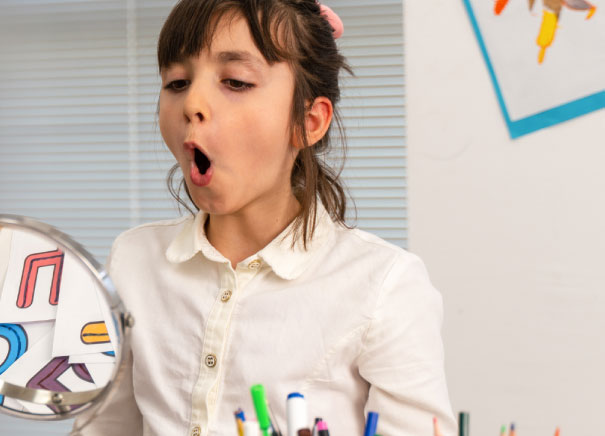
Speech Pronunciation Disorders
Typically seen in children with Articulation Disorders, Phonological Disorders, or Childhood Apraxia of Speech (CAS).
Speech pronunciation disorders occur when a child has difficulty producing specific sounds correctly or using speech patterns appropriate for their age. This can range from a simple “lisp” to more complex patterns where a child swaps sounds (like saying “tat” for “cat”). In some cases, it involves a coordination struggle where the brain has difficulty planning the movement of the tongue and lips. It is important to note that pronunciation difficulties do not reflect a child’s intelligence. While their speech may be hard for others to understand, their ability to think and learn is often perfectly typical. Early intervention helps ensure that these speech sounds are corrected before they impact a child’s confidence or school performance.
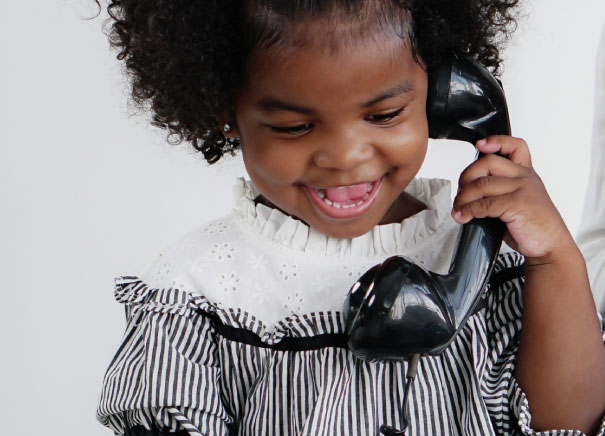
Language Delay
Typically seen in children with Developmental Language Disorder (DLD), Late Talkers, Autism Spectrum Disorder (ASD) and/or Global Developmental Delays.
A language delay occurs when a child is not meeting the expected milestones for their age in understanding or using words. This may manifest as a “Late Talker” who has a small vocabulary, or a child who struggles to put words together into sentences. A language delay is different from a speech disorder; it is a struggle with the “code” of language rather than the physical production of sounds. Even if a child is slow to start talking, a language delay is not a permanent indicator of their intellectual potential. With the right support, many children can “catch up” or find effective ways to communicate while their language skills continue to grow.

Auditory Processing Disorder (APD)
Typically seen in children with normal hearing who struggle to make sense of what they hear, often appearing alongside ADHD or Learning Disabilities.
Auditory Processing Disorder is not a problem with the ears but a “glitch” in how the brain interprets sound. A child with APD can hear perfectly well in a quiet room but their brain struggles to filter out background noise or distinguish between similar-sounding words (like “seven” and “heaven”). This can make following directions in a noisy classroom feel impossible. It is essential to recognize that APD is a processing challenge, not a lack of intelligence. The child’s brain simply needs different strategies such as visual cues or a quieter environment to successfully manage the information it receives.
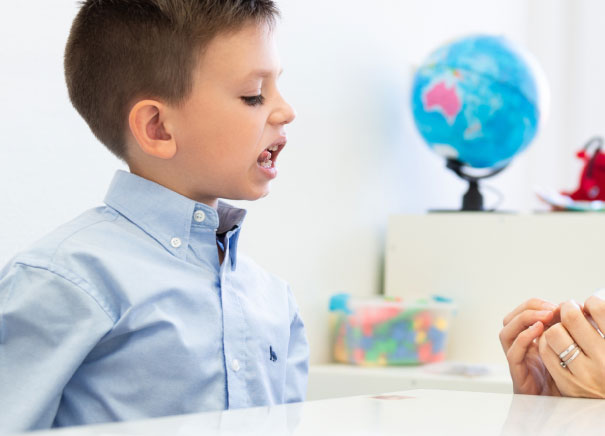
Stuttering (Paediatric Fluency) Disorder
Typically seen in young children during the developmental period (ages 2–5) or as a persistent fluency disorder.
Paediatric stuttering involves disruptions in the flow of speech, such as repeating sounds, stretching out vowels, or “blocking” on a word. While many children go through a period of “normal disfluency” as their language skills explode, persistent stuttering is a neurological difference in how the brain times speech movements. A child who stutters knows exactly what they want to say; their motor system just needs support to coordinate those words smoothly. Intelligence and creativity are often strengths in children who stutter.

Dysphagia (Feeding and Swallowing Difficulties)
Typically seen in premature neonates, infants and children with Laryngomalacia, Sensory Processing Issues, Cerebral Palsy, Cleft Lip and Palate.
Paediatric feeding and swallowing difficulties (often called Paediatric Dysphagia) involve trouble sucking, chewing, or swallowing safely. This can range from physical coordination issues to “picky eating” that is actually a sensory-based fear of certain textures. For some children, eating can be a scary or painful experience if they frequently gag or choke. It is important to understand that feeding difficulties are often a physical or sensory hurdle, not “bad behaviour.” Therapy focuses on making eating safe and enjoyable, ensuring the child gets the nutrition they need to grow.
Early Literacy Difficulties
Typically seen in children at risk for Dyslexia or those with underlying Phonological Processing challenges.
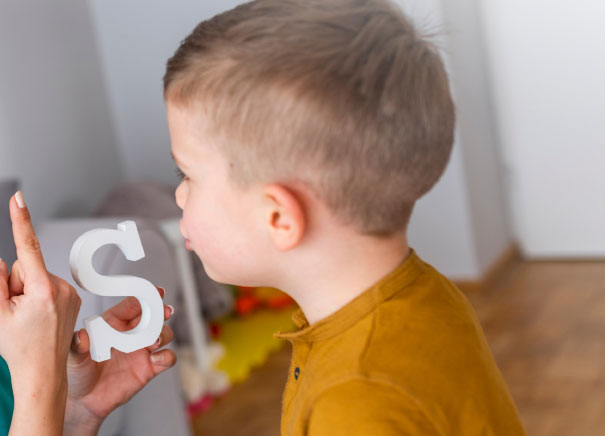
Early literacy difficulties involve a struggle with the “building blocks” of reading and writing, such as recognizing letters, rhyming, or blending sounds together to make words. Because reading is essentially “language in print,” speech therapists are often the first to spot these challenges. A child may be a great talker but struggle to see how sounds map onto letters. It is crucial to remember that reading struggles are not a reflection of a child’s brightness. Many brilliant children struggle with early literacy and simply need a more structured, multisensory way of learning how to decode words.
Aural Rehabilitation
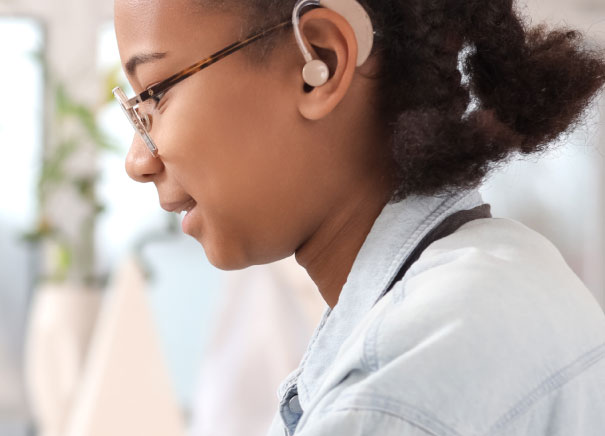
Typically seen in children with Hearing Loss, Cochlear Implants, or those using Hearing Aids.
Aural rehabilitation is the process of helping a child with hearing loss learn how to listen and speak. When a child receives a hearing aid or cochlear implant, their brain has to be “taught” how to make sense of the new electronic signals it is receiving. This therapy focuses on maximizing the child’s use of their residual hearing and developing clear speech. It is important to note that hearing loss is a sensory barrier, not a cognitive one. With the right technology and specialized training, children with hearing loss can develop strong language skills and thrive in mainstream environments.
Pragmatic (Social) Difficulties
Typically seen in children on the Autism Spectrum (ASD), or those with Social Communication Disorder or ADHD.
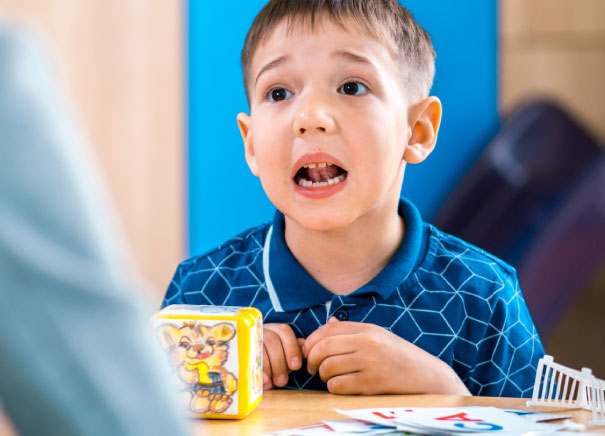
Pragmatic difficulties involve the “social rules” of language—how we use talk to interact with others. This includes knowing how to take turns in a conversation, staying on a topic, or understanding that a friend is bored. A child may have a huge vocabulary but not know how to join a group of peers at play. It is vital to understand that social communication challenges are a difference in social processing, not a lack of interest in others. Many children with pragmatic difficulties are very social but simply need to be explicitly taught the “social code” that other children seem to pick up automatically.